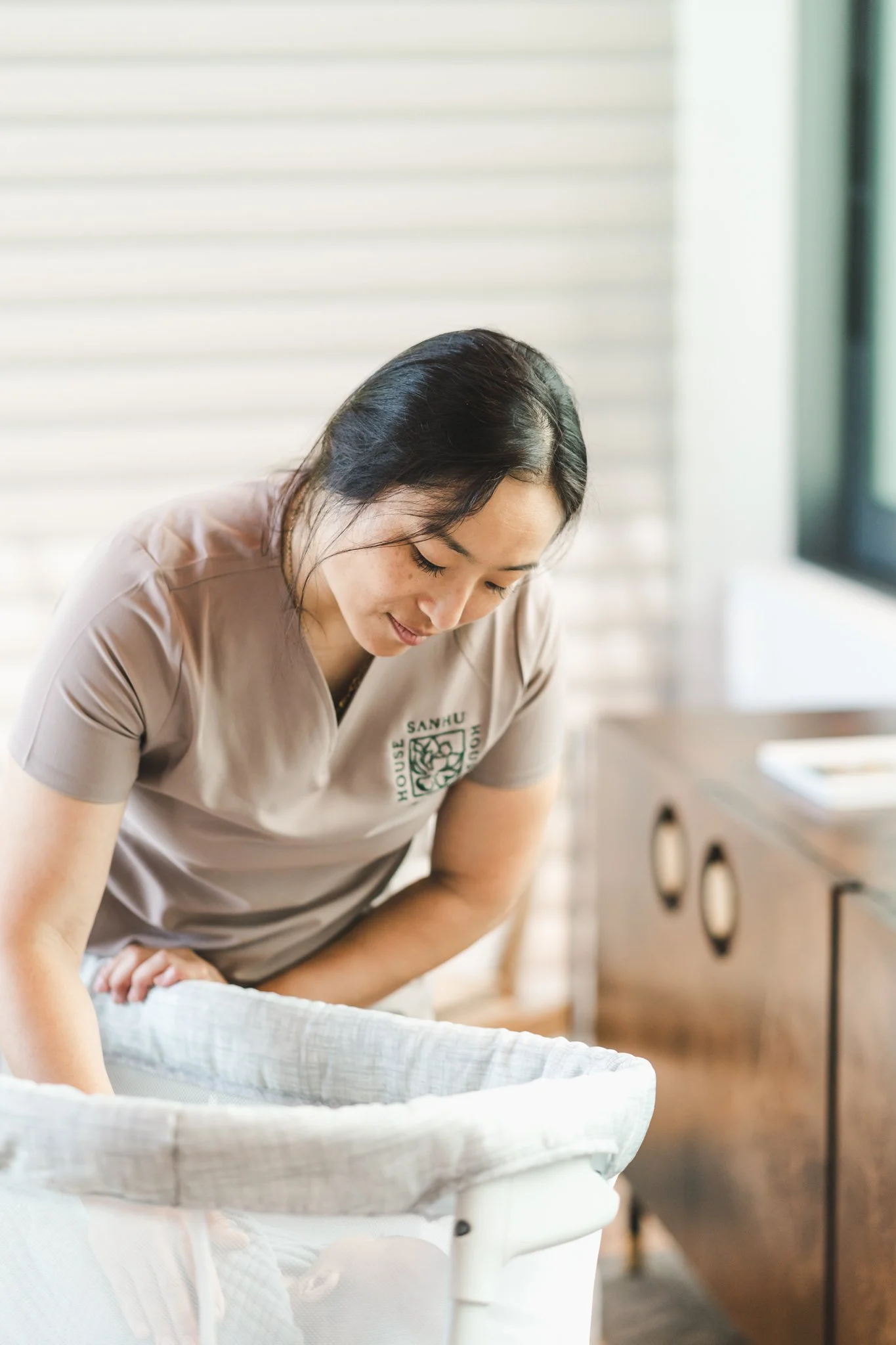
Postpartum Protocols & Methodology
A restorative model proven to improve healing, emotional stability, and the quality of early family life.

The most overlooked phase of maternity care is after birth
Poor sleep, mental health challenges, and lack of structured recovery are leaving mothers vulnerable and unsupported.

1 in 7
mothers experience postpartum depression within the first year after birth
55%
postnatal women report poor sleep quality and deprivation, leading to health issues later on
90%
of new mothers report feeling unprepared - and 95% say their support is inadequate

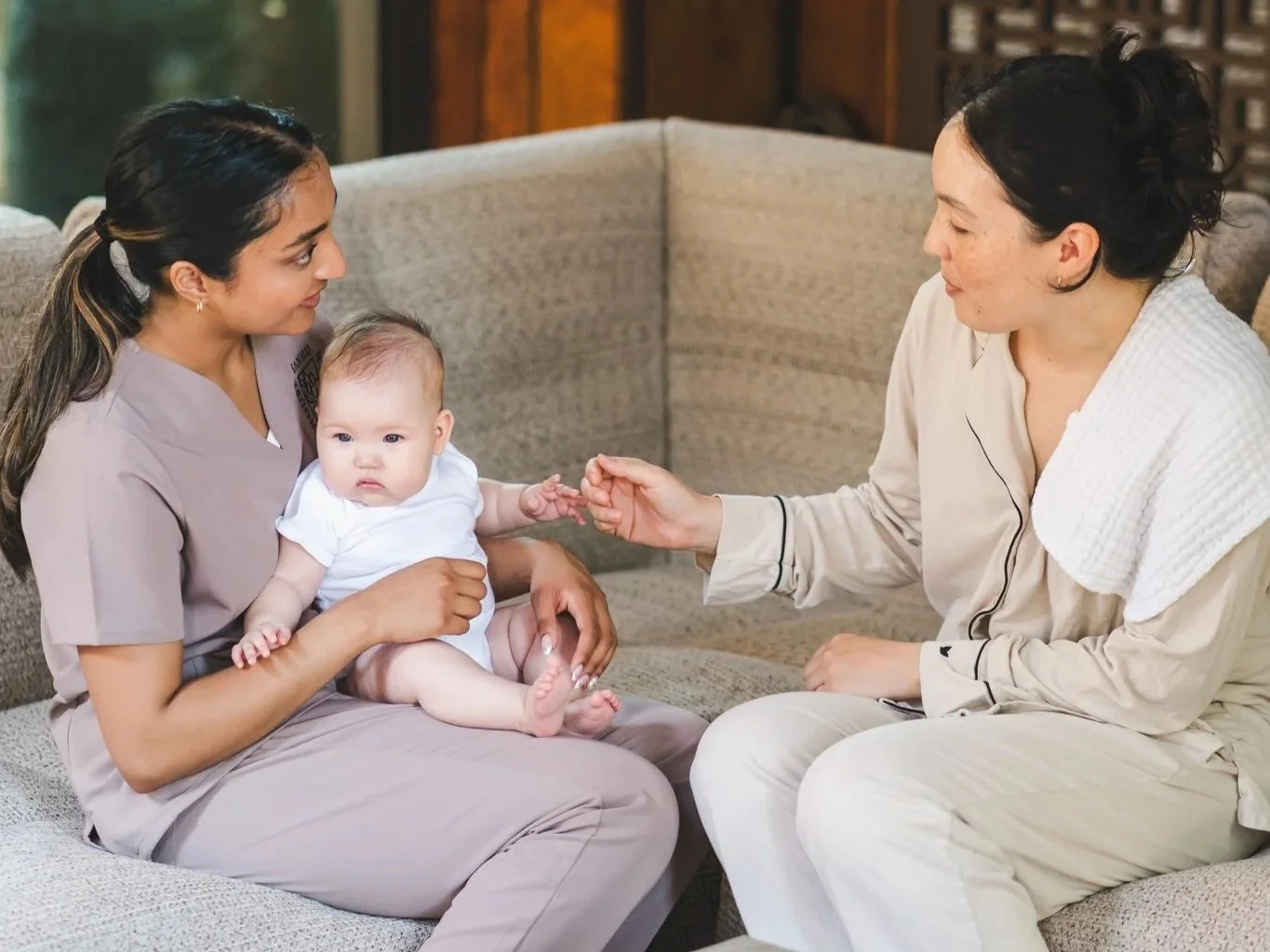

“When you go home, you feel like you’re in the wilderness.”
Donna Alvarado
Senior Medical Writer, Stanford Health Care
92% of Sanhu House guests report feeling less anxious and more prepared for motherhood.

Meet Your Care Leaders
Jy-ah Min | Director of Experience & Ops, Postpartum Doula
Jy-Ah Min is the Director of Experience and Operations at Sanhu House and a certified postpartum doula. With 20 years of creative and operational experience, she blends her love for storytelling and human-centered design with evidence-based postpartum care. Her work in Health & Safety at The Walt Disney Company strengthened her commitment to creating safe, nurturing environments for families. After living across four continents, she connects easily across cultures and cares deeply about advocating for mothers and families no matter their background.
Jy-Ah’s Why: “We need higher standards and a fresh perspective—postpartum is an opportunity for every mother to transition into a stronger, healthier, and happier version of herself. Our society should honor and celebrate postpartum as an essential journey into motherhood and help mothers thrive, not survive!”

Dana Morgan | Maternal Care Specialist, Postpartum Doula
Dana is Sanhu House's Maternal Specialist and Full Spectrum Doula who has long been drawn to babies and birth. She earned her B.A. in 2012 and began nursing school with plans for Labor and Delivery, then shifted toward doula work to support families more personally and continuously. In 2015 she completed Full Spectrum Doula training with Doula Trainings International in Marin County. During the COVID-19 era, she expanded her scope with Childbirth Education training, deepening her focus on education and empowerment across birth and postpartum care.
Dana's Why: "I genuinely believe that peace on earth begins at birth. I do not take it lightly that families trust me to care for them and their new babies during the most raw and intimate time in their lives and I feel genuinely honored to do this work"
Discover Sanhu House’s Training Methodology
Sanhujori, reimagined for today.
Our doulas are trained in a model rooted in Sanhujori. Every touchpoint protects rest, maintains warmth, and prioritizes nutrition, with firm but kind boundaries that keep the mother at the center. Care is non-clinical and evidence informed, delivered through simple daily rituals that are repeatable, trackable, and calm by design.
Why Our Doulas Feel Different
- Philosophy first. Every doula is trained in sanhujori, a Korean-rooted postpartum philosophy centered on warmth, rest, and nourishment. These foundations shape how she supports both mother and baby throughout each visit.
- Managed care, not a solo hire. Your primary doula is backed by Sanhu House, with planned backup coverage, shared care notes, and a Matrescence Care Specialist helping the team stay aligned as your recovery evolves.
- Anticipatory by design. Our doulas are trained to notice what could make the next hour easier, from preparing for an upcoming feed to refreshing water, washing bottles, or creating space for you to rest before you have to ask.
- Care for the whole environment. Newborn care is paired with the practical household support that protects recovery, including bottle preparation, sterilizing, baby laundry, light nourishment preparation, and maintaining a calm space.
- Communication that keeps everyone aligned. Shared notes and a dedicated care thread give your doulas and Matrescence Care Specialist visibility into what happened, what is changing, and what may need attention next.
The Sanhujori Foundations We Train
Rest
- Protected sleep and recovery windows created by consolidating newborn and household tasks.
- Calm, predictable routines and low-stimulation environments that make it easier for both mother and baby to settle.
- Daytime and nighttime care shaped around the family's feeding rhythm and the mother's need for uninterrupted rest.
Warmth
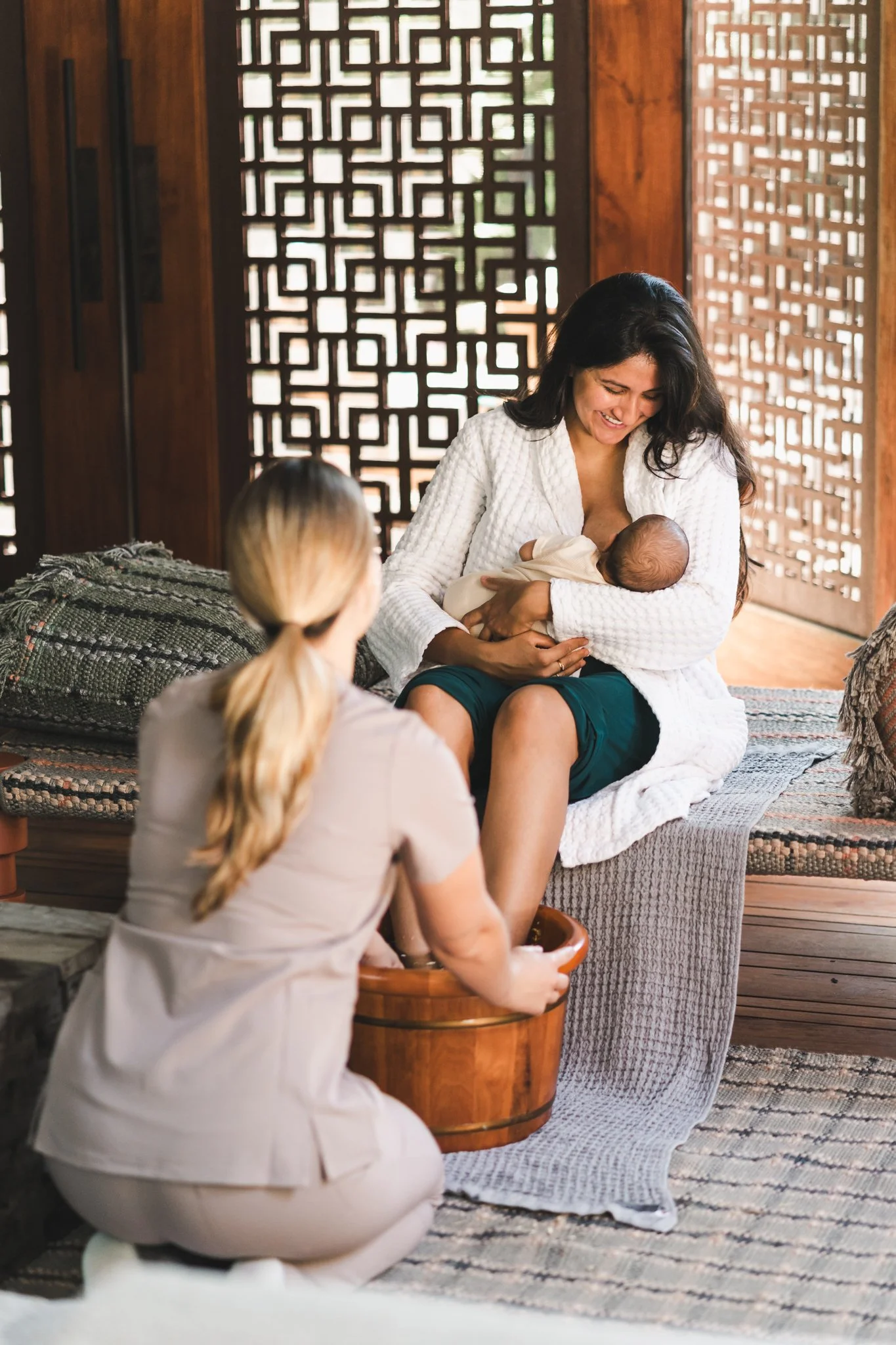
- Comfort-focused warmth through appropriate practices such as warm compresses, pre-warmed linens, warming socks, and foot soaks.
- Attention to the mother's physical comfort and environment, with each practice adapted to her preferences and sensitivities.
- Gentle warming rituals that create opportunities to slow down, decompress, and return attention to maternal recovery.
Nourishment
- Regular hydration and light nourishment preparation using what the family has available in the home.
- Warm, easy-to-reach food and drinks timed around feeding, sleep, and recovery windows.
- Practical support that makes it easier for the mother to eat and hydrate consistently without having to coordinate it herself.
What Our Doulas Are Trained To Do
Infant feeding and lactation foundations
- Evidence-informed support for positioning, latch, bottle feeding, pumping routines, and feeding preparation within the postpartum doula scope.
- Feeding support that considers both the baby's needs and the mother's rest and recovery priorities.
- Recognition of concerns that should be referred to an IBCLC, pediatrician, or another clinical provider.
Breast lymphatic guidance
- Gentle, comfort-focused guidance that supports warmth and circulation, with attention to hygiene, timing, consent, and red-flag awareness.
Hydration and light nourishment
- Regular hydration prompts, electrolyte options when available, and light nourishment preparation around feeding and rest windows.
- Practical preparation and bedside setup that make food and water easier to access while the mother is resting or feeding.
Warming rituals and foot soaks
- Safe, comfort-oriented use of warmth and select herbs in foot soaks and topical rituals, with careful attention to sourcing, preferences, and sensitivities.
Newborn care and soothing
- Feeding, changing, soothing, settling, and developmentally appropriate newborn care during daytime or overnight visits.
- Calm environmental cues and repeatable routines that help families learn what works for their baby.
Household support that protects rest
- Bottle preparation and sterilizing, baby laundry, feeding station resets, and other newborn-related tasks that create more room for maternal recovery.
Sanhujori in daily practice
- Care organized around warmth, rest, and nourishment rather than a generic list of newborn tasks.
- Anticipatory support that identifies what may be needed next and acts within scope before the household becomes overwhelmed.
- Clear care notes and handoffs that help the family, doulas, and Matrescence Care Specialist stay aligned.