
Doula Insurance Coverage Is Expanding - Here's What That Means for Your Fourth Trimester
A major shift is underway in how the American healthcare system thinks about birth support.

This year, UnitedHealthcare became the first large insurer to begin rolling out doula coverage across employer-sponsored plans nationwide. By 2027, all UHC employer plans will include the benefit.
That's meaningful progress — and it's worth understanding clearly. Because doula coverage and postpartum recovery care are two distinct things. And building a real plan for after the birth requires knowing exactly what each category includes.
What the Research Says About Doulas
The case for doulas has been building for years, and the data is now strong enough that major medical organizations are paying attention.
A 2024 study published in the American Journal of Public Health analyzed ten years of Medicaid claims data and found that women who had a doula experienced a 47% lower risk of cesarean delivery, a 29% lower risk of preterm birth, and were 46% more likely to attend a postpartum checkup. Those aren't marginal findings.
The American College of Obstetricians and Gynecologists has noted that continuous doula support is among the most effective tools for improving labor and delivery outcomes. And as the U.S. continues to have one of the highest maternal mortality rates among high-income countries, that kind of evidence is prompting real policy change.
At least 26 states now require Medicaid to cover doulas. UnitedHealthcare's announcement represents the private insurance sector beginning to follow.
What "Doula Coverage" Actually Includes
Most insurance doula benefits — including the new UHC benefit — cover birth doulas. That means support during labor and delivery: continuous presence, comfort measures, advocacy, and emotional support through the birth itself.
This is valuable. The research is clear on that. But birth support and postpartum recovery are distinct care categories — and the distinction matters when you're planning.
What birth doula coverage typically includes:
One to two prenatal visits
Continuous support during labor and delivery
One postpartum follow-up visit
What postpartum recovery typically requires:
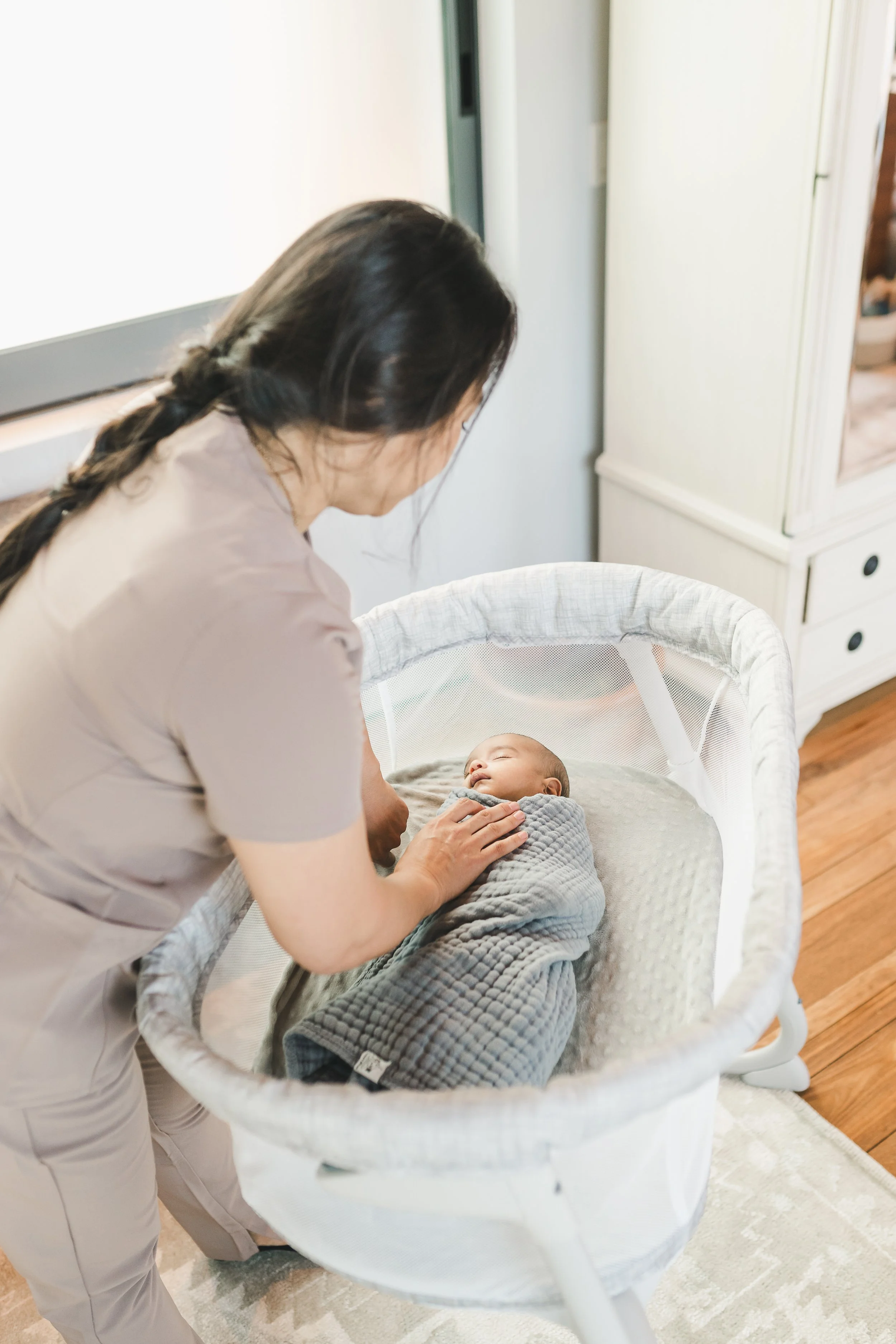
Daily or multi-day in-home support during the first weeks
Overnight newborn care so parents can sleep
Lactation support (IBCLCs, not just encouragement)
Coordination across providers — pediatrician, OB, therapist, bodywork
Meal planning, household logistics, and recovery rituals
Ongoing availability (not a single visit)
The gap between these two categories is where most families feel underprepared. A birth doula helps you through one day. Postpartum recovery care helps you through twelve weeks.
Benefits You May Already Have
Here's what many families don't realize: postpartum care benefits may already exist in your employer's benefits package — separate from standard insurance.
Carrot Fertility is the most common channel. Carrot partners with employers to provide fertility and family-building benefits, and for many plans, that includes postpartum care: in-home doula support, lactation consultants, overnight newborn care, and recovery services.
Sanhu House is a Carrot-approved provider. We're seeing client reimbursements range from $5,000 to $50,000, with an average of $23,000. We provide all the documentation needed for submission — superbills, itemized receipts, and care summaries.
If your employer offers Carrot, your postpartum care may already be covered. It's worth checking before your due date — most families don't know to look until afterward.
What This Means for Your Postpartum Plan
The doula coverage expansion is a positive step. It signals that the healthcare system is beginning to recognize what families have known for a long time: supported births lead to better outcomes.
But the fourth trimester — the weeks and months after the birth — is where the real gap lives. And that gap is addressable, often using benefits that already exist.
If you're planning your postpartum:
Check your Carrot Fertility dashboard (or ask HR) to see what's covered
Understand the difference between birth doula support and postpartum recovery care
Build your plan before the birth — not after
Ask your postpartum care provider about documentation for reimbursement
The coverage landscape is changing. For many families, access to comprehensive postpartum care is closer than it appears.
FAQ
Does insurance cover postpartum doulas?
Most standard insurance plans do not yet cover postpartum doulas directly. However, many employer-sponsored benefits programs — particularly through Carrot Fertility — do cover postpartum care including in-home doula support, lactation services, and overnight newborn care. Check with your HR department or Carrot dashboard.
What's the difference between a birth doula and a postpartum doula?
A birth doula provides support during labor and delivery — typically one day. A postpartum doula provides support during the weeks and months after birth, helping with newborn care, feeding, recovery, and household logistics. They are distinct roles with different training and different scopes.
How much does postpartum care cost?
Costs vary depending on the scope and duration of care. Many families are surprised to learn that employer benefits through Carrot Fertility can cover a significant portion — Sanhu House clients see average reimbursements of $23,000. We provide all documentation needed for submission.
Sanhu House is a Carrot-approved postpartum care provider in Los Angeles and Orange County. Book an intro call at bit.ly/SanhuHouseIntro.
