
Maternal Mental Health Month: Why Postpartum Care Is Mental Health Care
May is Maternal Mental Health Month - a time dedicated to bringing visibility to one of the most overlooked parts of motherhood: what happens after birth.
The postpartum period is often framed as a beautiful, joyful chapter. And while it can be, it is also one of the most physically demanding, emotionally vulnerable, and mentally intense transitions a woman will ever experience.
At Sanhu House, we believe maternal mental health should never be treated as an afterthought. It should be part of the foundation of postpartum care itself.
Because supporting a mother’s recovery is not simply about helping her “bounce back.” It is about protecting her long-term wellbeing.
What Is Maternal Mental Health Month?
Maternal Mental Health Month, recognized each May, raises awareness around mental health conditions that occur during pregnancy and postpartum—often referred to as Perinatal Mood and Anxiety Disorders (PMADs).
These include:
Postpartum depression (PPD)
Postpartum anxiety (PPA)
Postpartum OCD
Birth-related PTSD
Postpartum psychosis
Prenatal depression and anxiety
Mental health conditions are the most common complication of pregnancy and childbirth, affecting approximately 1 in 5 women in the United States.
Postpartum depression alone affects about 1 in 8 women, yet many go undiagnosed or untreated.
These numbers are not rare. They are not unusual. They are not a reflection of failure.
They are a sign that postpartum support has been missing from the conversation for far too long.
Why Maternal Mental Health Matters
We often talk about preparing for birth.
But far fewer conversations happen around preparing for recovery.
Hormonal shifts, sleep deprivation, physical healing, feeding challenges, identity changes, relationship adjustments, and the pressure to “do it all” can create the perfect environment for overwhelm.
For many mothers, the struggle is not visible.
It can look like:
Constant worry and racing thoughts
Feeling disconnected from the baby
Irritability or emotional numbness
Guilt for not feeling “happy enough”
Difficulty sleeping, even when exhausted
Intrusive thoughts that feel frightening or isolating
And because motherhood is so often associated with gratitude and joy, many women feel shame admitting when they are struggling.
This is why awareness matters.
Because early support changes outcomes.
Why This Is Especially Relevant for Sanhu House Mothers
In many traditional cultures, postpartum care is never treated as optional.
In Korean sanhujori (산후조리), postpartum recovery is structured around one belief: a mother must be cared for in order to heal well.
This means:
Rest is protected
Warmth is prioritized
Nourishment is intentional
Support is continuous
Recovery is expected, not rushed
This model understands something modern systems often forget:
Mental health does not begin in crisis.
It begins with how a mother is supported from the start.
When mothers are left to recover alone, without rest, nourishment, or practical help, emotional distress often follows.
When mothers are held properly, healing looks very different.
That is why Maternal Mental Health Month is deeply aligned with what we do at Sanhu House.
We are not simply offering services. We are rebuilding the standard of postpartum care.
How Sanhu House Supports Maternal Mental Health
We believe postpartum care should be proactive, not reactive.
Our work is designed to support mothers before they reach burnout - not after.
In-Home Postpartum Doula Support
Our doulas provide more than newborn help.
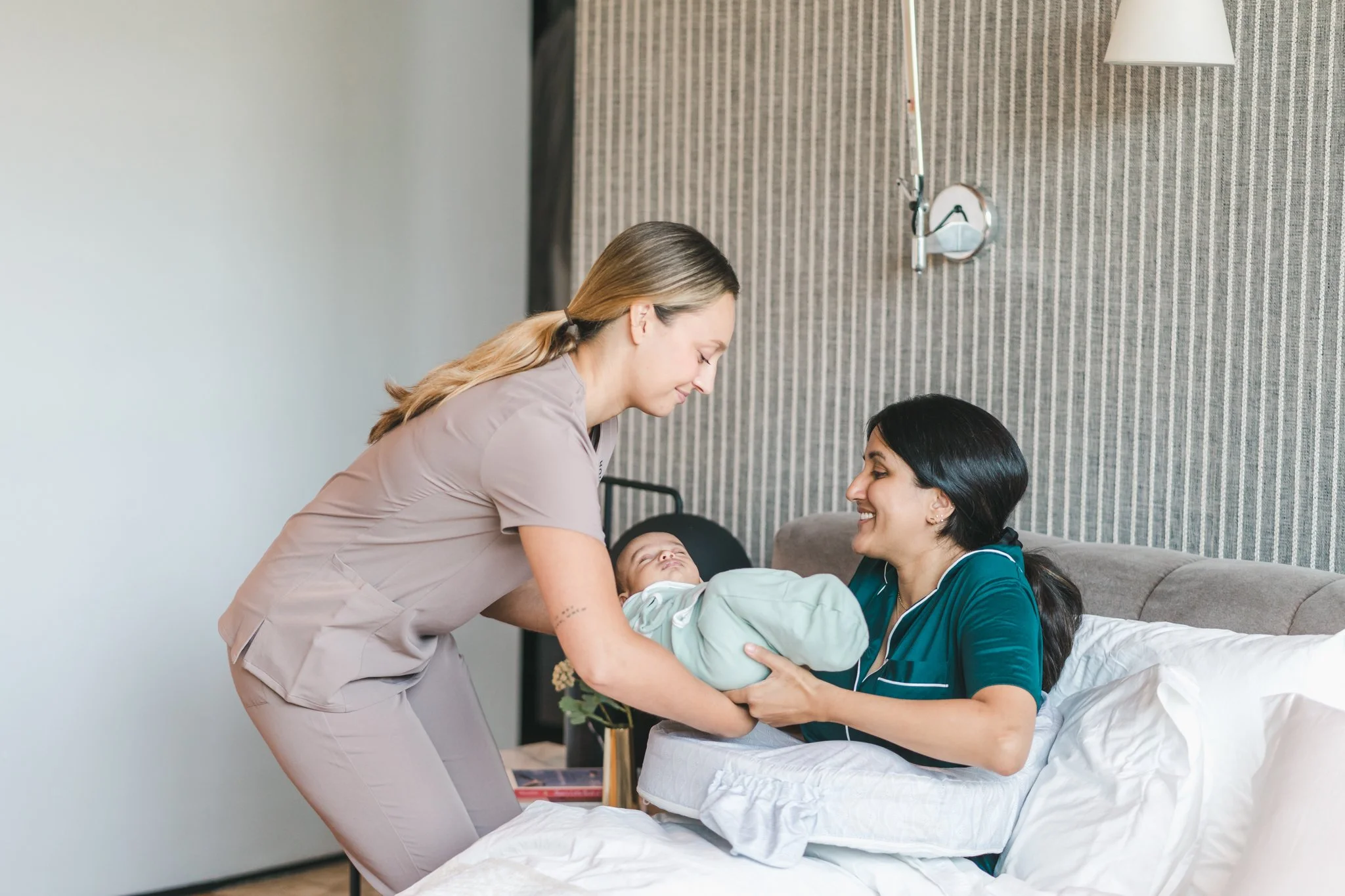
They offer emotional presence, practical care, recovery support, and continuity during one of the most vulnerable stages of motherhood.
This includes:
Overnight newborn support
Feeding and lactation guidance
Recovery monitoring
Emotional check-ins
Family transition support
Traditional postpartum practices rooted in sanhujori
Sometimes the greatest form of mental health support is simply not having to do everything alone.
Retreat-Style Recovery Care
For mothers who need deeper restoration, our postpartum retreat offers a dedicated healing environment where recovery is prioritized.
This includes:
24/7 expert care
Nutritious postpartum meals
Bodywork and recovery treatments
Lactation and newborn support
Quiet, uninterrupted rest
A peaceful environment designed for healing
Because rest is not indulgent. It is clinical.
Traditional Healing Practices That Support Nervous System Regulation
Practices like belly binding, warming therapies, herbal support, foot soaks, and intentional postpartum nutrition are not simply traditions - they are regulation tools.
They support:
Physical recovery
Circulation and inflammation
Hormonal balance
Sleep quality
Stress reduction
Emotional grounding
When the body feels safe, the mind follows.
A Better Start Changes Everything
Maternal mental health is not separate from postpartum care. It is postpartum care.
When we support mothers early - with rest, warmth, nourishment, and real help - we reduce the likelihood of crisis later.
This is not luxury. This is healthcare.
This Maternal Mental Health Month, we invite families, healthcare professionals, employers, and communities to ask a better question:
Not “How is the baby?”
But also:
“How is the mother being cared for?”
Because when a mother is well, everything around her is stronger. And she deserves nothing less.
To learn more about postpartum recovery at Sanhu House, explore our in-home care and retreat options designed to support mothers fully - from birth through healing.
