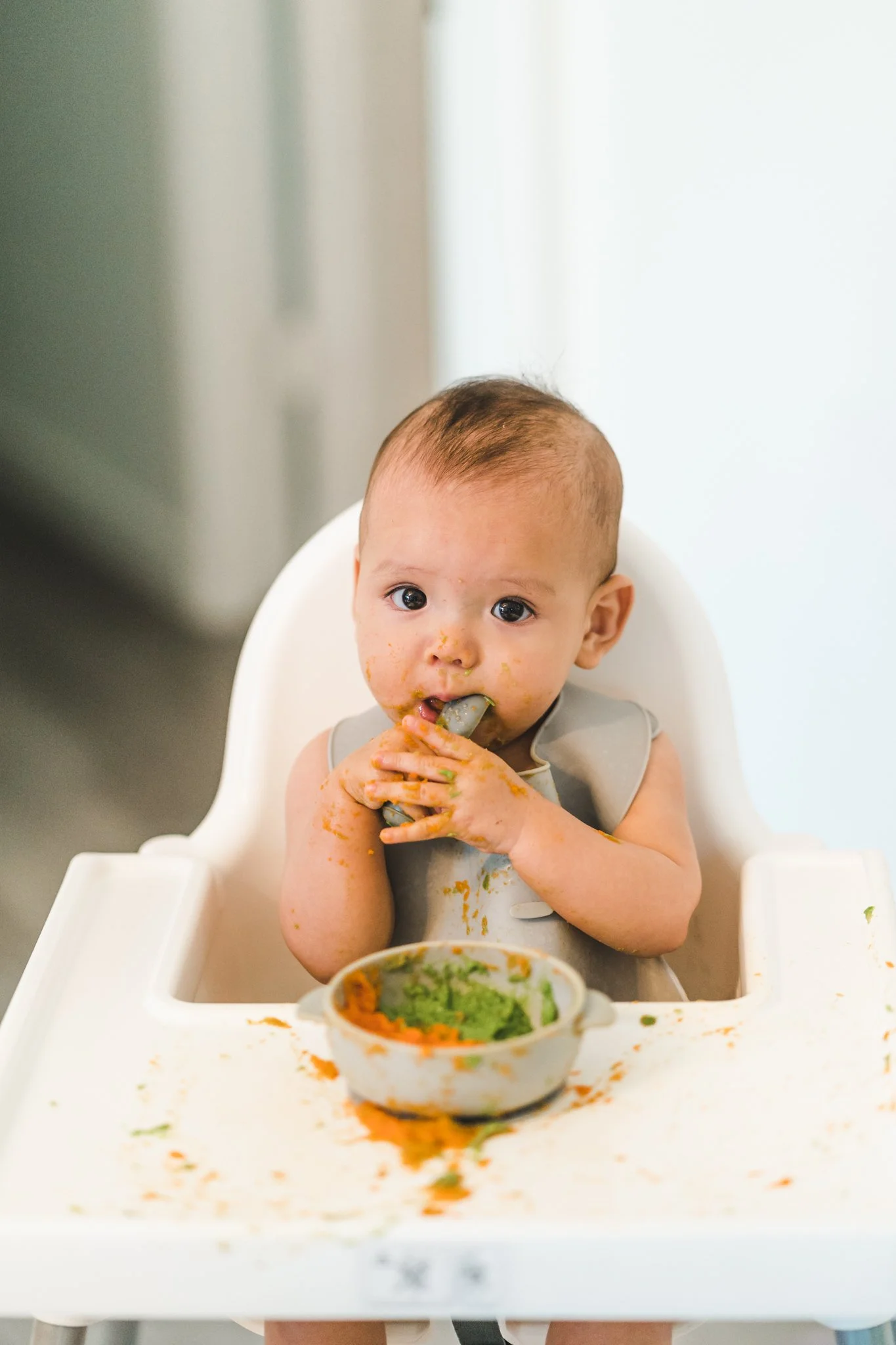
First Bites
Starting solids at 5 to 6 months: when, what, and how to stay calm at the table.
From the Sanhu House Care TeamStarting solids is not a test you can fail.
It's a slow, messy, joyful introduction to food. Until their first birthday, breast milk or formula still does the heavy lifting.
In Korea this season has its own name, ieusik (이유식), and it often begins with a bowl of silky rice porridge.
Look for all of these together
- Holds their head steady and sits upright with little or no support.
- No longer pushes food straight back out with their tongue.
- Brings toys and hands to their mouth with control.
- Watches you eat, reaches for food, and opens their mouth as it comes near.
- Can turn their head away to say "no more".
Not a sign on its own
- Waking more at nightOften a sleep or developmental change.
- Chewing on fistsVery normal, especially when teething.
- Wanting more milk feedsOften a growth spurt.
- Being a bigger baby
Most babies are ready around six months, and never before four. If your baby was born early or has severe eczema, check with your pediatrician first.
Iron first
- Soft minced or pureed beef, chicken, or fish.
- Mashed lentils, beans, or tofu. Well-cooked egg.
- Rice porridge (juk) with minced beef or vegetables.
- Iron-fortified baby cereal, rotating rice with oats, barley, and others.
- Pair with vitamin C foods, like broccoli or berries, to help absorb the iron.
Soft, safe textures
- Smooth purees from a spoon, soft finger-sized pieces, or a mix.
- The squash testFood should squash easily between your thumb and finger.
- Steamed sweet potato, avocado, ripe banana, soft-cooked broccoli.
- Move toward lumpier textures within a few weeks.
- Plenty of vegetables, bitter greens too, not just sweet fruit.
Allergens, early and often
- PeanutSmooth peanut butter thinned with water or breast milk.
- EggFully cooked, never raw.
- DairyPlain full-fat yogurt or soft cheese.
- Then wheat, sesame, fish, and soyIn time.
- One new allergen at a timeEarly in the day. Once it's tolerated, keep offering it a few times a week.
Start small
One small meal a day, when baby is alert and content, not overly hungry. A few spoonfuls or a few bites is plenty. Build toward two meals, then three, over the coming months. Offer sips of water from an open or straw cup.
It can take 8 to 15 tries before a baby accepts a new flavor. A grimace is not a "no".
Not before one
- Honey, in any formIncluding baked goods. It carries a risk of infant botulism.
- Cow's milk as a main drinkFine in cooking, yogurt, and cheese.
- Juice, added salt, added sugar
- Raw or runny eggAnd unpasteurized dairy or juice.
- High-mercury fishShark, swordfish, king mackerel, tilefish.
Choking hazards
- Whole nuts, and chunks of nut butter.
- Whole grapes, cherry tomatoes, and blueberries. Squash or quarter them.
- Raw hard vegetables and raw apple.
- Popcorn, hard crackers, and chips.
- Round slices of sausage or hot dog.
Safe seating
- Always upright, facing youIn a high chair, with their feet supported.
- Never lying backOr in a car seat, or on the move.
- Never alone with foodNot even for a moment.
- Not when very tired or upset
- No pressureNo bribes, no "one more bite".
Gagging is loud
Coughing, sputtering, a red face, watery eyes, a tongue pushing food forward. Baby recovers on their own in moments.
It's their own protective reflex doing its job. It's how they learn to move food safely around their mouth.
1 of 2Choking is silent
Baby can't cry, cough, or breathe. Lips or face turn blue or gray. A look of panic, and no recovery.
This is an emergency. Act immediately and call 911.
2 of 2Stay close, stay calm
- Keep a soft, neutral face.
- Don't reach into their mouthIt can push food further back.
- Keep them upright and let them work it through.
- Once they've recovered, offer gentle encouragement and carry on at their pace.
- Take an infant CPR class firstIdeally with anyone else who'll feed your baby. Knowing what to do is the surest way to feel calm.
You choose what, when, and where. Baby chooses whether, and how much.
And remember the mother. At six months she may still be healing and feeding through the night. Solids are a family project, not one more thing on her list.
What it looks like
- Eat togetherSo baby can watch and copy.
- Let them use their handsA splash mat, and a calm attitude toward the floor.
- Stop when they say stopTurning away, closing their mouth, pushing food off.
- Offer it again another dayWithout comment.
- Share the loadPartners take a meal, the prep, or the clean-up. A weekly pot of juk helps everyone.
When to call for help
- Call 911For trouble breathing, swelling of the lips, face, or tongue, or repeated vomiting after a new food.
- Call your pediatricianFor hives, a new rash, or vomiting after a new food.
- Ongoing constipation, or blood in the stool.
- Refusing all food for weeks, or worries about weight gain.
- Before you begin, if your baby has severe eczema or a known food allergy.
Every family table begins with a single spoonful.
Some days they'll eat with gusto, some days it all ends up on the floor. Both are progress. Let it be a warm one.
Want to talk it through? Your Sanhu House doula is always here.