
Congee for New Moms: The Postpartum Comfort Food Worth Making Right Now
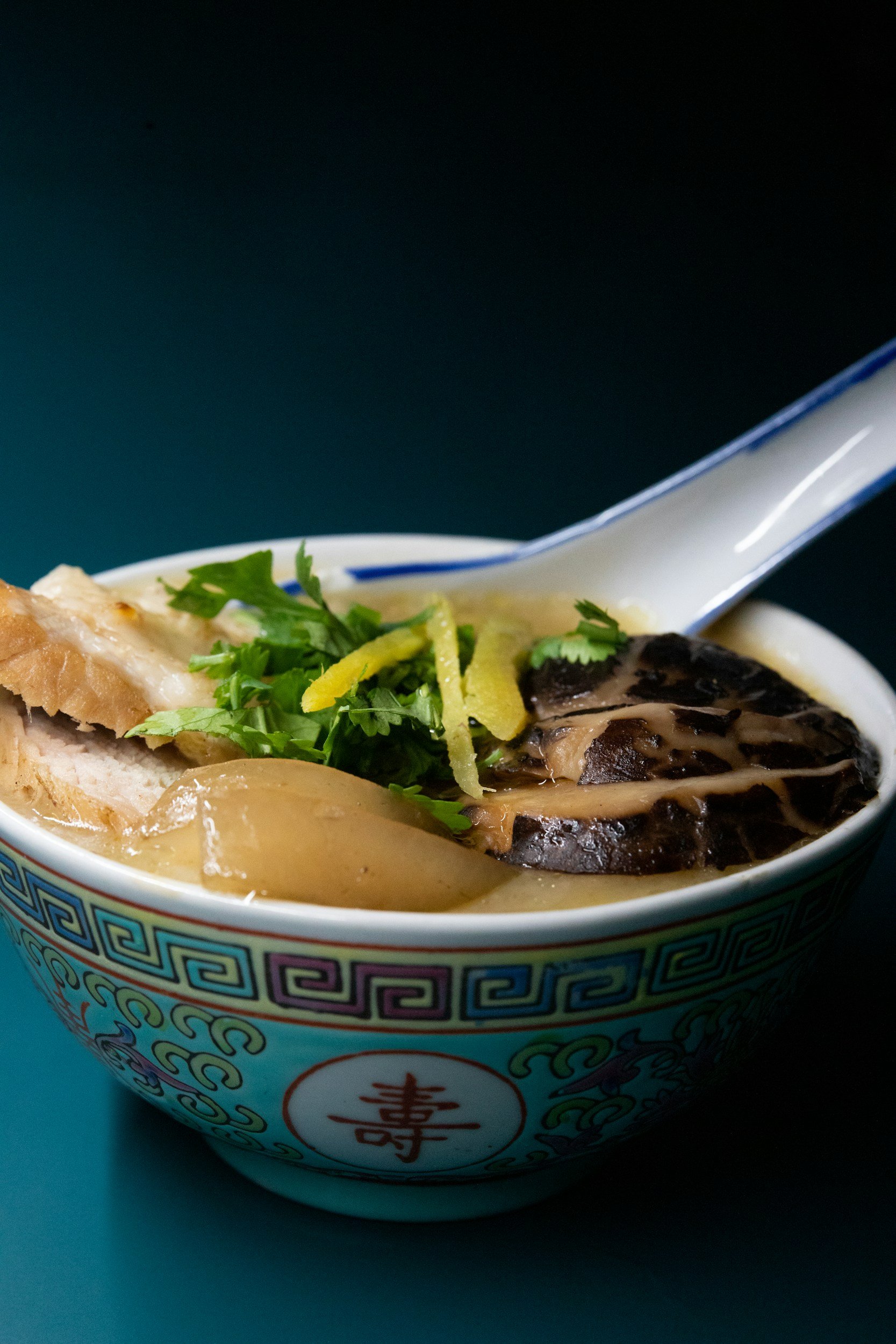
There's something about the first cold morning of autumn that makes you want something warm in a bowl.
For new mothers, that instinct is more than comfort - it's wisdom. As the temperature drops and the body is still deep in the work of postpartum recovery, warming, easy-to-digest foods become especially important. Which brings us to one of the oldest, most quietly powerful postpartum dishes in East and Southeast Asian food traditions.
Congee.
What is congee?
Congee - known as juk in Korean, zhou in Mandarin, chao in Vietnamese, and okayu in Japanese - is a slow-cooked rice porridge that is part of postpartum food traditions across Asia. It is made by simmering rice in far more water than you'd use normally, until the grains break down into a soft, silky, deeply nourishing broth.
It is one of the first foods given to new mothers in many of these traditions — not because it is a compromise, but because it is genuinely ideal.
Why it's especially good postpartum
From a nutritional standpoint, congee earns its place on the postpartum table for several reasons.
It's easy on the digestive system. After birth, many women find that digestion is sluggish — partly from the physical trauma of labour, partly from pain medications, partly from simple exhaustion. Congee asks very little of the gut.
It's deeply hydrating. The high water content supports milk production, tissue repair, and the kind of cellular recovery the body is quietly doing around the clock.
It absorbs whatever you add to it. This is the real magic. On its own, congee is mild and gentle. But with the right additions — ginger for warmth and circulation, bone broth for collagen and minerals, sesame oil for healthy fats, leafy greens for iron — it becomes genuinely nourishing.
It's warming. In traditional Chinese medicine and Korean sanhujori practice, new mothers are encouraged to keep the body warm, avoid cold foods and cold air, and support qi and blood recovery. Congee, especially made with ginger and bone broth, is a natural fit for that approach.
The Sanhu House Congee
This is the version our doulas make most often in the cooler months. It's gentle enough for the first week postpartum and substantial enough to sustain a breastfeeding mother through a long night.
Makes 2–4 servings
Ingredients
For the base:
1 cup jasmine or short-grain white rice
8 cups water or good-quality bone broth (chicken or pork work well)
3–4 slices of fresh ginger
For serving (choose what your body wants):
A soft-boiled or poached egg
A drizzle of sesame oil
A few drops of soy sauce or tamari
Finely sliced spring onion
A small handful of wilted spinach or bok choy
Toasted sesame seeds
Instructions
Rinse the rice until the water runs clear. Add to a large pot with the broth or water and ginger slices.
Bring to a boil over medium-high heat, then reduce to the lowest possible simmer.
Cook uncovered for 45–60 minutes, stirring occasionally, until the rice has fully broken down into a thick, creamy porridge. Add more liquid as needed — congee should be loose, not stiff.
Remove the ginger. Ladle into a deep bowl.
Add your toppings, drizzle with sesame oil, and eat while it's hot.
Doula tip: Make a large batch and refrigerate. It keeps for 3–4 days and reheats beautifully with a splash of water or broth. Having a pot ready means a warm meal is always minutes away — important in those early weeks when cooking feels impossible.
A few variations worth knowing
For extra blood-building support: Add a handful of goji berries and a few jujube (red dates) to the pot while it cooks. Both are staples in postpartum food traditions across Korea and China and are known for their iron and antioxidant content.
For a heartier meal: Stir in finely shredded chicken or pork during the last 20 minutes of cooking.
For a vegan version: Use vegetable broth and top with avocado, edamame, and a good drizzle of sesame or perilla oil.
There's a reason this dish has been trusted across generations and across cultures. It is food as care. Food as medicine. Food that says, in the gentlest possible way: you are being looked after.
If you're in the early weeks of postpartum recovery and the kitchen feels like the last place you have energy for, we hope someone makes this for you. And if you're preparing for a baby's arrival, consider adding it to your freezer prep list — one pot now, many easy meals later.
