
Meet Dana Morgan, Sanhu House's First-Ever Matrescence Care Specialist
Everyone asks how the baby is
When a baby arrives, the questions come quickly. How much does she weigh? Is he sleeping? Who does she look like?
Far fewer people stop to ask the mother how she is: how her body is healing, whether she has eaten today, and how she is coping with the quiet, enormous shift of becoming someone's mother.
At Sanhu House, that is the first question we ask. Today we're proud to introduce the person who will make sure we keep asking it: Dana Morgan, our first-ever Matrescence Care Specialist.
What is matrescence?
Matrescence is the physical, psychological and emotional transition a woman goes through when she becomes a mother. Anthropologist Dana Raphael gave it its name in the 1970s. Psychologist Dr. Aurélie Athan later expanded the idea.
Both compared it to adolescence. Like adolescence, matrescence is a natural developmental passage. It is not a medical condition to be treated, and it is not a phase to "bounce back" from.
Your body changes. Your hormones shift. Your relationships, your sense of time and your sense of self all move at once. That deserves more than a six-week checkup and a "you've got this." It deserves care.
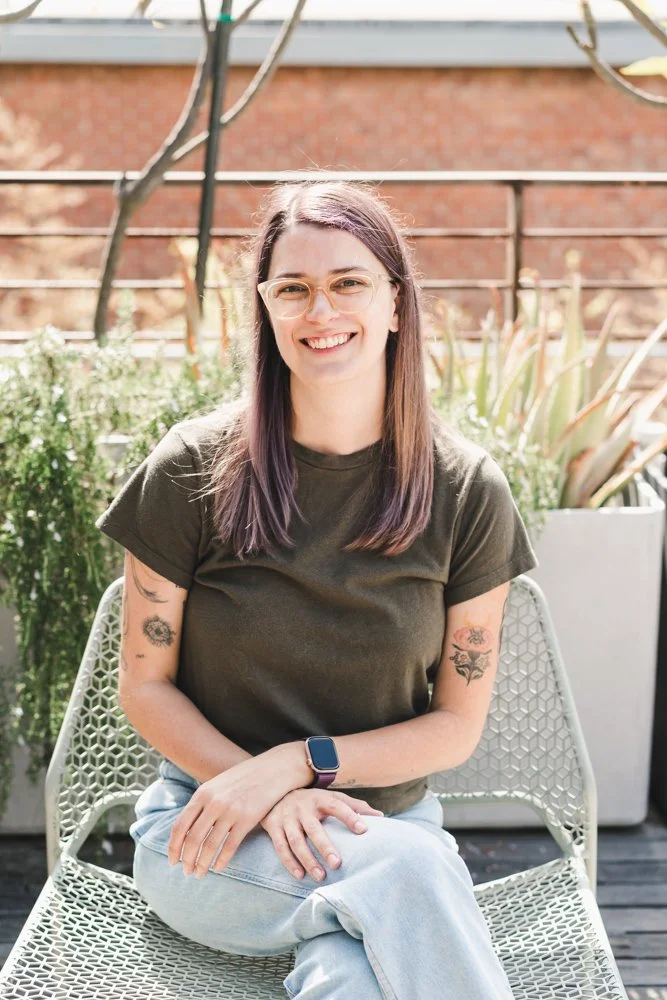
Meet Dana Morgan
Dana is a Los Angeles-based full-spectrum doula who has supported families through birth and postpartum since 2015. She is certified as a birth doula, postpartum doula and childbirth educator through Doula Trainings International. She is also trained in placenta encapsulation and holds a full-spectrum menstrual and sexual wellness certification from the Artemis School.
Dana first studied nursing, planning to work in labor and delivery. She chose doula work instead, for the chance to walk alongside families more closely and for longer. Within our team she's already known as "the doula for the doulas."
"We often treat birth like the finish line, when it's actually the starting line. The weeks after birth shape how a mother heals, feeds her baby and feels about herself, and I've seen firsthand what happens when a mother puts everyone else first for too long. Consistent, hands-on support in those early weeks makes a real difference, and that's what this role is built for. Becoming a mother is a profound transition, and no one should have to navigate it alone."
Dana Morgan, Lead Doula and Matrescence Care Specialist
What Dana will do in her new role
One-on-one matrescence check-ins with our clients, helping new mothers, and fathers, name and adjust to the identity shift of becoming a parent.
A dedicated education curriculum focused on matrescence, separate from clinical postpartum care and traditional birth education.
Mentoring our full team of doulas, so that identity-aware, trauma-informed care runs through every family we support, not just her own.
A bridge to perinatal mental health support, connecting clients with therapists and support groups when they need more care.
Shaping what our families take home, including the keepsake each client receives at the end of their stay.
Why this role, and why now
Postpartum mental health is getting more public attention than ever. Recent news stories have put postpartum psychosis and maternal mental illness in the headlines, and many mothers have spoken about the stigma they faced when they opened up.
We believe support should start early, with practical, consistent care, and not once a mother reaches a crisis point. Too many families are still going without it:
74% of American women say there isn't enough focus on postpartum healthcare for mothers, and 64% say mothers are often forgotten once the baby arrives (Stagwell / The Harris Poll).
53% of women who have been pregnant received little or no information about postpartum depression from a healthcare provider (same survey).
Mental health conditions are the leading cause of pregnancy-related deaths in the U.S., and more than a third of those deaths happen between six weeks and a year after birth (CDC data via MMHLA).
The early weeks matter, and so do the months that follow. That's why Dana's role looks at the whole transition, not just the first few days.
Rooted in sanhujori
In Korea, caring for a new mother isn't a luxury. It's expected. Sanhujori, the tradition of postpartum recovery, has shaped Korean family life for centuries, with its own rituals, nourishing meals and warming teas for the weeks after birth.
Today, more than 85% of Korean mothers who gave birth in 2024 stayed at a sanhujoriwon, a dedicated postpartum care center, for structured rest, nutrition and newborn support (The Korea Times). In America, most mothers are sent home and expected to get on with it.
"Everyone asks how the baby is. At Sanhu House, we ask how the mother is, and there's a reason for that. For my grandmother and my mother, this kind of care was simply expected. I built Sanhu House with that history in mind. We start with what the mother's body, her baby and her household need, and build the hours around that. We're thrilled about this new role because we know Dana, with the support of our whole team, will be able to help more mothers across Los Angeles and Orange County experience the fourth trimester the way it's meant to be experienced."
Julia Grace Kim, Founder, Sanhu House
Care built around you, from $65 an hour
Alongside Dana's appointment, we've introduced a new way to book care. In-home and overnight postpartum support now starts at $65 an hour, day or night, with no minimum commitment.
Some families want overnight help for the first few weeks so everyone can sleep. Others want a few daytime hours to eat a warm meal, shower or simply rest. Our sanhujori-trained doulas start with what you, your baby and your household need, and build the hours around that.
Birth isn't the finish line. It's the starting line. Let's plan for what comes after.
Book a call with us today to talk through what your fourth trimester could look like.
