
What is diastasis recti and what actually helps?
It affects the majority of pregnant women. Here's what the research says…
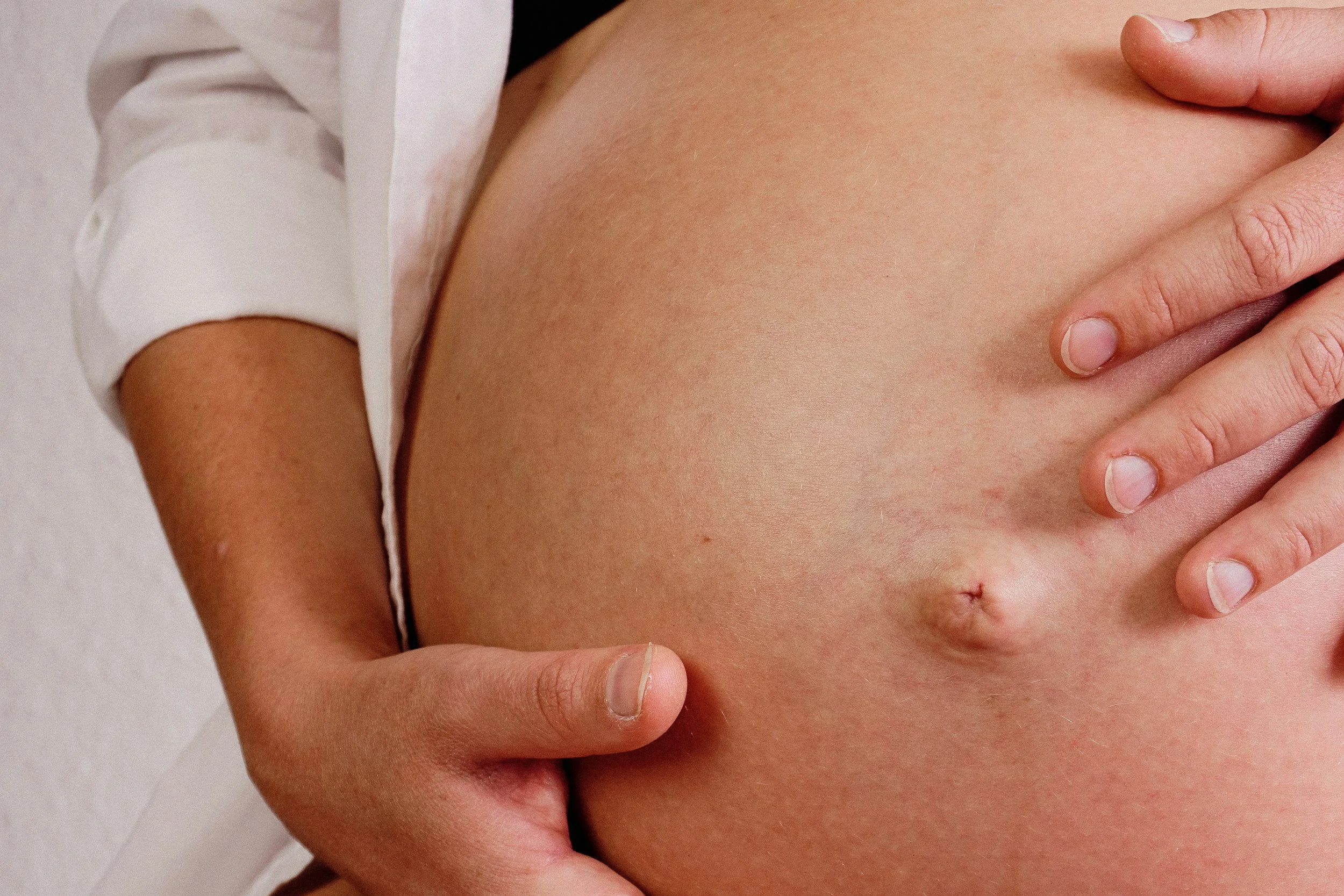
If you've ever heard the term "diastasis recti" and immediately felt a little lost, you're not alone. It gets thrown around a lot in the pregnancy and postpartum world, sometimes in ways that are reassuring, sometimes in ways that feel alarming. So let's actually talk about what it is, how common it is, and what the research says you can do about it.
No scare tactics. Just the honest version.
What's actually happening
Your "six-pack" muscles — the rectus abdominis — run in two vertical strips down the centre of your abdomen. They're held together by a band of connective tissue called the linea alba. During pregnancy, as your uterus grows, it pushes outward against your abdominal wall. At the same time, the hormonal changes of pregnancy cause the linea alba to soften and become more elastic — which allows the two muscle strips to pull apart.
That gap is diastasis recti.
Some separation during pregnancy is completely normal. Your body literally needs it to make room for your baby.
The issue is when that gap stays wide after birth, and when the tissue in between loses enough tension that your core stops functioning the way it should. That's when it becomes something worth addressing — not because of how it looks, but because of what it means for how your body works day to day.
Symptoms can include a belly bulge that doesn't seem to budge, lower back pain, a feeling of core weakness, bloating, and pelvic floor issues. Some women notice a ridge or "doming" at the midline when they do things like sit up or lift something heavy. That's worth paying attention to.
How common is it?
More common than most people expect. Research puts the numbers at anywhere between 30–70% of pregnant women at some point during their pregnancy. Part of why the range is so wide is that different studies use different measurement tools and different thresholds for what counts as a gap worth noting.
30–70% of pregnant women develop DRA during pregnancy
~100% have some separation by 35 weeks gestation
60–73% still have it at 6 weeks postpartum
39–45% still affected at 6 months postpartum
What these numbers tell us is that if you have it, you're in extremely good company. It's also worth knowing that many women's gaps close on their own in the weeks after birth, as the muscles naturally regain some tone. The women who need more targeted support are those where that process stalls.
Who's more likely to deal with it?
Anyone can develop DRA, but a few things seem to increase the odds of it persisting:
More than one pregnancy. Each pregnancy stretches the linea alba a bit further. Like a rubber band stretched repeatedly over time, it gradually loses some of its original elasticity.
Twins or multiples. More babies means more pressure on the abdominal wall for longer.
Higher BMI. Chronic elevated pressure on the abdomen puts sustained strain on the connective tissue over time.
Gestational or type 2 diabetes. Research links this to a higher risk of DRA, particularly in the years after delivery.
Worth saying clearly though: these are risk factors, not guarantees. Plenty of women with all of the above heal without much trouble, and plenty with none of them still need support. Bodies are unpredictable.
What helps during pregnancy
The goal during pregnancy isn't to prevent separation - it's going to happen, and fighting it isn't possible or even useful. What matters is keeping your core functional as your body changes.
A 2024 randomised controlled trial confirmed that pregnant women can exercise both their abdominal and pelvic floor muscles throughout pregnancy without worsening DRA. That's good news, because staying strong is genuinely protective.
The things most supported by evidence:
Deep core work. The transverse abdominis is the deepest layer of your core — the muscle that wraps around your torso like a corset. Exercises that gently activate it help support your bump and reduce the load on the midline.
Pelvic floor training. Safe throughout pregnancy, and evidence supports pairing it with core work rather than treating it as a separate thing.
Breathing and posture. Diaphragmatic breathing and keeping a neutral spine reduce unnecessary intra-abdominal pressure — the kind that pushes outward on the gap.
One thing to watch for: if you're doing any movement and you notice a visible ridge or peak forming down the centre of your belly — that's called doming, and it's a sign there's too much pressure going through the midline. Ease up on that movement. Traditional sit-ups and crunches are the most common culprits, but it can happen with other exercises too.
What helps postpartum
Here's the bit people most want to know. The good news is that most DRA responds well to the right kind of rehabilitation. Surgery exists for severe cases, but the vast majority of women do well with conservative management — which basically means physio and movement.
Research shows that physiotherapy improves how the core functions day-to-day, even in cases where the gap doesn't fully close. Function matters more than measurement.
See a pelvic health physiotherapist. This is the single most useful thing you can do. They can measure the gap, assess how your core is actually working (which isn't the same as the size of the gap), and build a programme that makes sense for where you are — not a generic six-week plan from the internet.
Train deep and surface muscles together. Research on postpartum rehab consistently finds that programmes combining both the deep core muscles and the more superficial ones — with breathing integrated throughout — get better results than exercises that only target one layer.
Relearn how you move day-to-day. How you get out of bed, how you pick things up off the floor, how you carry your baby — these add up. Small adjustments to how you load your core through daily life support recovery in a way that a once-daily exercise session on its own can't.
Support garments. Abdominal binders can be helpful for comfort and functional support in the early postpartum period, particularly for women with significant separation. They're a useful tool — just not a fix on their own.
Something worth knowing: the "drawing-in" technique - where you're cued to suck your belly button toward your spine — has actually been shown in studies to widen the gap rather than close it. It used to be recommended widely, but it's no longer considered an appropriate primary treatment for DRA. If you've been told to do this, it might be worth revisiting with a physio.
Want to know more? Or have further questions? Get in touch with our team today!
Medical SourcesBoissonnault & Blaschak (1988), cited in ScienceDirect; da Mota et al., Manual Therapy 2015 (ScienceDirect); Sperstad et al., BJSM 2016 (PubMed 27324871); PeerJ 2025 (doi:10.7717/peerj.20299); Scientific Reports 2024 (PMC11514151); PMC Comprehensive Review 2025 (PMC12234620); Theodorsen et al., J Physiother 2024 (70:142–148); ACOG Committee Opinion No. 804, Obstet Gynecol 2020; StatPearls — NCBI Bookshelf 2023; Skoura et al., Int Urogynecol J 2024 (35:491–520); Gluppe et al., J Physiother 2023 (69:160–167); Scientific Reports NMA 2025; Cleveland Clinic; MedlinePlus (NIH); Physiopedia DRA.
